Web design that brings in customers
DP Projects is a web design agency for growing businesses. We design custom websites, build most of them on WordPress, and set them up so the right people can find you and get in touch.
Most small business websites look fine and do very little. The phone number is hard to find on a phone, the services page lists everything and explains nothing, and the contact form asks for more than anyone wants to give. Visitors leave, and you never hear about it.
We start from the job your site has to do: bring in a call, a booking, a quote request or a sale. Then we design every page around that, from the menu to the last button.
Here’s what every site includes, the work behind it, how a project runs and how to decide between a custom website and a website builder.
Custom website design that starts with your customers
Every project starts with who arrives and what they came to do. We look at your analytics and the questions customers ask, then draw the structure before anyone opens a design tool. A clear site map and rough wireframes catch most problems while they’re still cheap to fix.
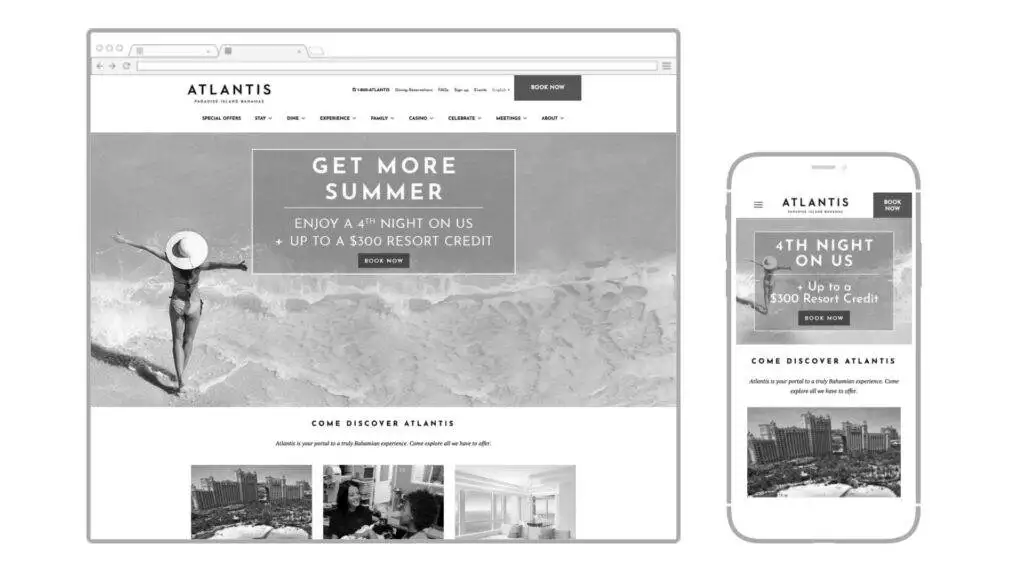
Then we design for the phone first, because that’s often where customers meet you first. When we redesigned the Atlantis Bahamas website, 63% of visitors arrived on a phone, so we mapped more than 200 pages and designed every booking step for a small screen.
Design that looks good is the starting point. The site also has to make the next step obvious.

Website design that moves the numbers
For iStorage, one tool on the website did the heavy lifting. Customers kept dropping out at the same question: which storage unit do I need? We redesigned the size guide to show the space instead of describing it. Web conversions rose 41% and online reservations rose 78% year over year.
For Easy Eats Meal Plan, the job was bigger. We took a meal plan that arrived by email and built it into a member dashboard in WordPress, with weekly plans, grocery lists and saved recipes on each member’s account.
For Circle of Security International, content was spread across several systems behind two logins. We redesigned the experience on Shopify, with clearer paths for each audience and simpler buying.

WordPress website design you can run yourself
We build most sites on WordPress because you own the result. You can add a page, publish a blog post or swap a photo without waiting on anyone, and when you need forms, bookings or a member area, there’s usually a tested plugin that does it.
We set it up so that’s easy to do safely: a small set of plugins, editable sections that keep the design intact, and a short handover so your team knows where everything lives.
WordPress isn’t always the answer. If you sell products online, Shopify is often the better fit, as it was for Circle of Security. We’ll recommend whichever platform suits the job.

Website design for small business: custom site or website builder?
Website builders like Wix and Squarespace are fine for some businesses. If you need a few pages, a contact form and a way to look credible, a well-made template can do the job, and we’ll tell you so.
A custom website earns its cost when the site has real work to do: when most of your enquiries come through it, when it needs to connect to your booking or CRM tools, or when you want to rank for the services you sell. That’s when structure, speed and search setup start paying for themselves.
The wrong reason to rebuild is boredom with the design. If the current site brings in work, we’ll fix what’s broken before we suggest starting again.
From first call to launch in five steps
Discover
Structure and design
Build
Launch and get found
A good website works every hour of the day, but only if it knows what it’s for.
Before you call anyone, write down the one thing you want a visitor to do on your site. That’s where we’d start too.
Keep reading: UX Design: What It Is and Where to Start · Red Flags When Hiring a Design Agency
Thinking about a new website?
Tell us what the site needs to do, and we’ll tell you honestly what it takes.