



Most local businesses don’t need cleverer SEO. They need the basics done properly: an accurate Google listing, pages that match real searches, honest reviews, and someone counting calls instead of rankings.
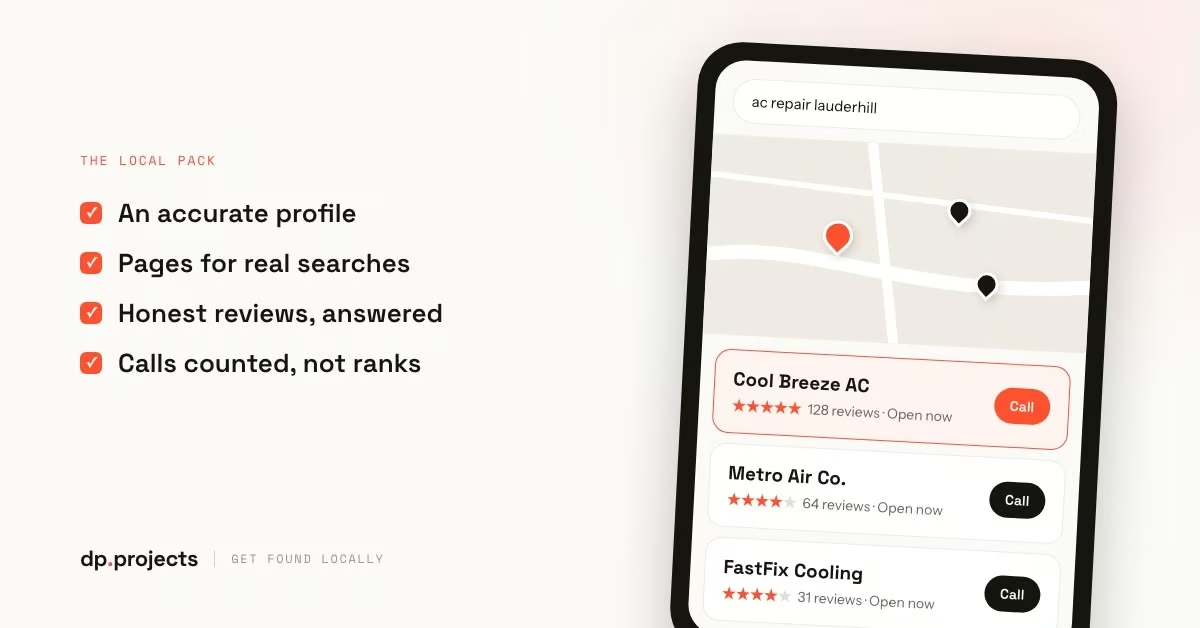
Most local customers decide here, before they ever reach your website.
Search for what you sell plus the name of your town. Before anyone sees a website, they get a map, three businesses, some star ratings and a button that says Call. Plenty of customers never scroll past it.
Winning that small box is what local SEO services are for, and it’s one of the few places a five-person firm can beat a national brand. Google doesn’t hand the spot to whoever spends most. It looks for the business that best matches the search, is nearby, and is well regarded locally.
We set this up for clients most weeks. Below is what the work actually involves, what to fix first if you’re doing it yourself, and what to ask before you pay someone else to do it.
Three signals. You control two of them.
Get your Google Business Profile right first
Your profile is often the first thing a customer sees and the last thing they check. If it says you’re open on Sunday and you aren’t, they won’t ring to ask. They’ll ring the next listing down.
Start with the primary category, because it carries more weight than any other field. Pick the one that describes your main service, not the one you’d like to be known for, and only add secondary categories that are true. Then check the address, phone number, website link and opening hours against your own site, holiday hours included.
Add real photos of the shop front, the team, finished jobs and the van. Customers spot stock imagery straight away. Then log in monthly. Google and the public can suggest edits to your listing, and they don’t always ask first.
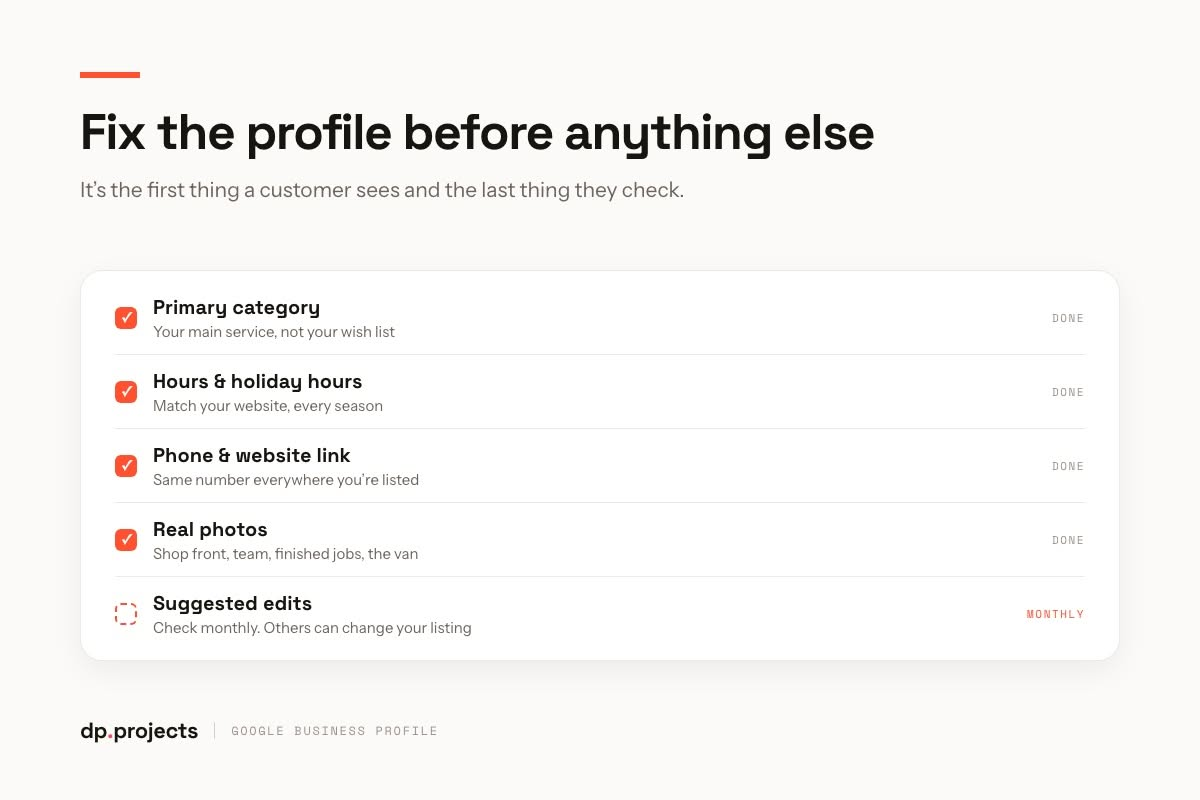
Check what a customer reads before they ring.
Local keyword research starts with how customers talk
Write down how a customer describes the problem, not how you describe the service. A clinic might call it a musculoskeletal assessment. The patient types “back pain physio near me.” Add the towns and neighbourhoods you really cover, and the words that signal someone is ready: emergency, same-day, price, open now.
Then give each important search a page of its own. A page for AC repair in Lauderhill should say what you fix, how fast you come out, roughly what it costs and how to book. It shouldn’t be the Fort Lauderdale page with the town name swapped. Readers notice, and so does Google.
Keep the plumbing tidy behind it: a page that loads quickly on a phone, your number visible without scrolling, and LocalBusiness structured data that matches your profile. And end every page with one obvious next step.
Online reviews: ask every customer, answer every review
A steady trickle of genuine reviews does more than fifty in one week. Ask when the job has just gone well, at the end of the appointment or in the invoice email, and send a direct link so it takes under a minute.
Reply to all of them, the bad ones especially. A calm, specific answer to a one-star review often reassures the next reader more than the review worried them. Give a phone number to take it offline, and write each reply fresh. A page of identical “Thanks for your feedback” replies looks like nobody’s home.
What not to do: never offer a discount for a review, write one yourself, or ask a customer to change what they said. It breaks Google’s rules and customers can tell. And if the same complaint keeps turning up, that’s an operations problem. No amount of SEO will fix it.
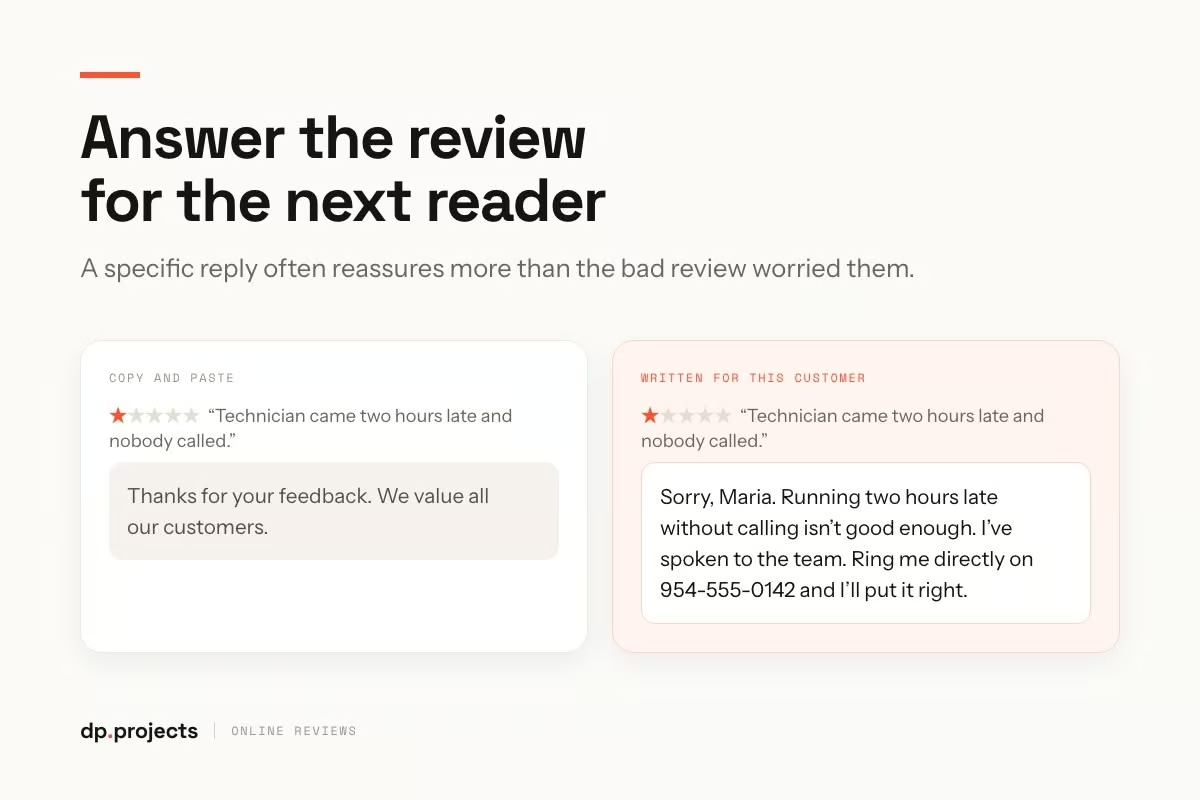
One of these replies is written for the next customer.
Measure calls and bookings, not rankings
Rankings shift by the day and by the street. Someone searching two miles away sees a different map from the one on your desk. Treat a rank report like a weather forecast.
The numbers worth watching sit closer to the till: calls from the profile, direction requests, form fills, bookings, and how many of those turned into paid work. Your profile shows the first few for free. Add call tracking and a “how did you find us” field in your CRM, and you’ll see which service and which town actually pay.
More people now ask AI assistants for a recommendation, too. Nobody can promise you’ll show up there. Consistent details, clear pages and genuine reviews are still your best chance, and it’s the same work.
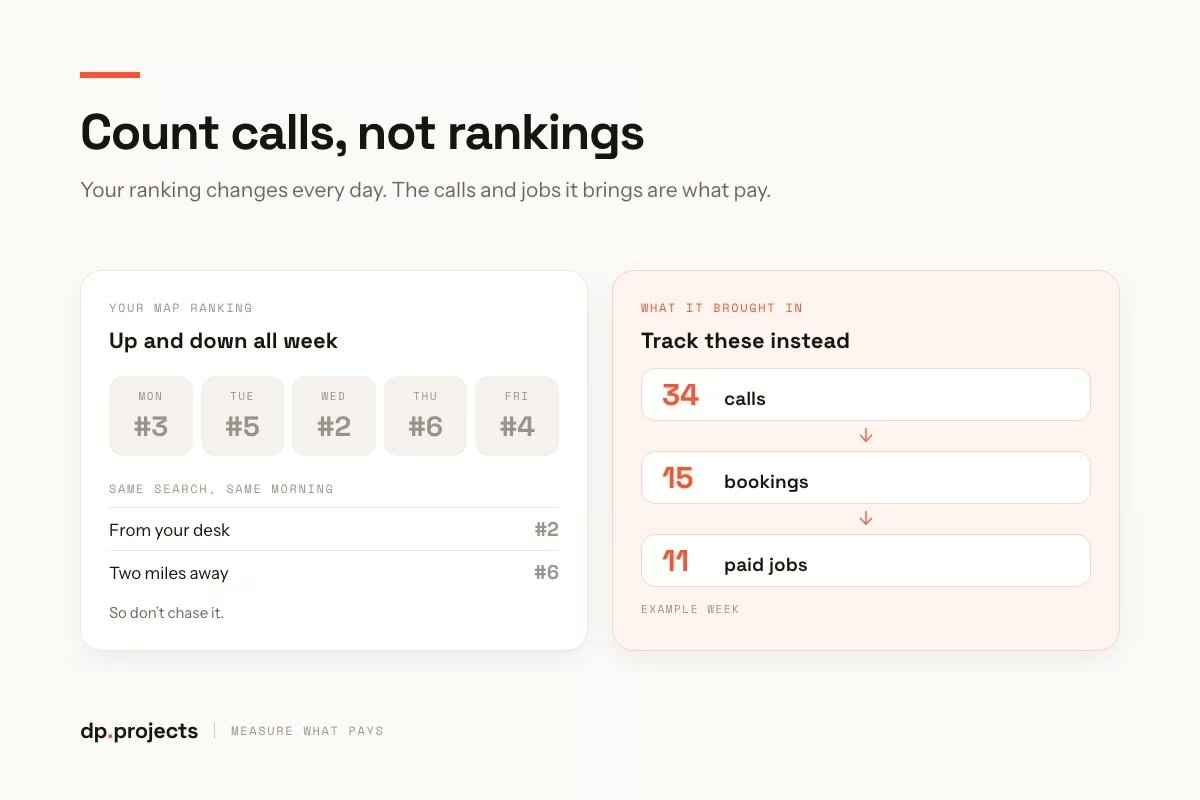
Rankings are weather. Calls are results.
How to choose a local SEO company
If you hire help, judge it on things you can check. Ask for examples from businesses like yours that show calls or bookings going up, rather than a screenshot of position one for a phrase nobody searches.
Walk away from anyone who guarantees the top spot. Nobody controls Google, your competitors, or where your customer is standing when they search. Before you sign, get straight answers to these.
The local businesses that win this rarely have the biggest budget. Their listing is accurate, their pages answer the question, and somebody replies to every review month after month.
This week, search your main service and your town on your phone and fix whatever is wrong in your own listing. Start with the opening hours.
Keep reading: How Get Found works · How Will AI Change Business? What To Do First
Not sure what customers see when they search for you?
We’ll check your listing, reviews and local pages against the businesses you’re up against, and tell you what to fix first.